Contents:
- Why Heat Damage Matters More Than You Think
- Understanding How to Curl Hair Without Heat Effectively
- Best Heat-Free Methods: Detailed Techniques
- Pin Curls: Classic and Reliable
- Roller Setting: Bigger Volume, Longer Lasting
- Braids and Twist-Outs: Natural Texture Amplification
- Wave-Setting Lotions: The Chemical Boost
- Troubleshooting: Why Your Heat-Free Curls Fall Flat
- Problem: Curls Look Loose or Disappear by Day 2
- Problem: Curls Feel Crunchy or Straw-Like
- Problem: Curls Form on Ends but Stay Straight at Roots
- Combining Methods for Maximum Results
- Maintaining Your Heat-Free Curls
- How Long Do Heat-Free Curls Last?
- Best Practices for Different Hair Types
- Fine or Thin Hair
- Medium Hair
- Thick or Coarse Hair
- Curly or Coily Hair (Types 2c–4c)
- FAQ: Common Questions About Heat-Free Hair Curling
- Can I wash my hair after setting curls without losing them?
- Does how to curl hair without heat work on very short hair?
- Will heat-free curls work if my hair is resistant and won’t hold shape?
- How often can I safely use these methods?
- Are there any products I must avoid before heat-free curling?
- Why Heat-Free Methods Deserve More Credit
Most people believe you need heat to get good curls. That’s wrong. You don’t need a blow dryer, curling iron, or crimper to create lasting, beautiful waves and curls. Heat actually damages your hair—stripping moisture, weakening the structure, and leading to breakage over time. The real secret? Working with your hair’s natural texture and using proven mechanical and chemical methods that last longer and cost less.
Quick Answer
You can curl hair without heat using pin curls, rollers, braids, twist-outs, or wave-setting lotions. For best results, apply the method to damp hair, leave overnight or for 6-8 hours, then gently release. Most heat-free methods last 2-4 days and work best on hair types from wavy to coily.
Why Heat Damage Matters More Than You Think
Heat damages hair at the structural level. When you apply temperatures above 300°F (149°C), you’re denaturing the proteins that hold your hair’s integrity together. Even lower heat—like the 250°F (121°C) many people use daily—causes cumulative damage. Your cuticles lift, moisture escapes, and the result is dry, brittle hair that won’t hold curls well, ironically making you reach for heat tools more often.
The numbers tell the story: a study published in the Journal of Cosmetic Dermatology found that regular heat styling increases protein loss in hair by up to 30%. That’s not a minor issue—it’s the difference between hair that holds curls and hair that falls flat. Heat-free methods eliminate this problem entirely.
Beyond damage, heat styling requires equipment costs. A decent curling iron runs £25–£80, and a blow dryer adds another £40–£150. Heat-free methods use products you likely have already—water, leave-in conditioner, and hair-setting lotion—keeping costs under £10.
Understanding How to Curl Hair Without Heat Effectively
Heat-free curling works through two mechanisms: mechanical shaping and moisture-setting. When you set damp hair in a curl pattern and let it dry, the hydrogen bonds in your hair restructure to that new shape. Add a setting product, and those bonds strengthen, creating curls that last days instead of hours.
The timing is crucial. Your hair must be at least 80% dry before you remove the curling method—otherwise, you’ll lose the shape as it air-dries afterward. This is why overnight methods work so well: 8-12 hours gives plenty of drying time. For daytime setting, plan for at least 6 hours.
James Coulson, a trichologist at the Institute of Trichologists, notes: “The advantage of mechanical curling methods is that they align your hair’s natural structure without breaking protein bonds. I recommend them to clients with fine or damaged hair who want visible results without further compromise.”
Best Heat-Free Methods: Detailed Techniques
Pin Curls: Classic and Reliable
Pin curls are the simplest heat-free technique and work on most hair types. They create defined, bouncy curls and can be sized to produce anything from tight ringlets to loose waves.
How to set pin curls:
- Wash and condition your hair, then apply a light leave-in conditioner.
- While damp (not dripping wet), section your hair into 1-2 inch squares.
- Take one section and smooth it with a fine-tooth comb.
- Curl the section around your index and middle finger, then slide those fingers out while holding the curl in place.
- Pin the curl flat to your scalp using a bobby pin, tucking the end underneath.
- Repeat across your entire head, working systematically from front to back.
- Leave overnight or for 8-10 hours minimum. For thicker hair, 12 hours is better.
- Remove pins gently and finger-comb curls to your desired shape.
Pin curls typically last 3-4 days and work best on hair that’s at least shoulder-length. For short hair, you’ll need smaller sections and more pins (expect 15-20 total). The curl size depends entirely on how you roll: smaller finger diameters create tighter curls, larger rolls create waves.
Roller Setting: Bigger Volume, Longer Lasting
Rollers create fuller curls and more dramatic volume than pin curls, especially on the crown and roots. They’re ideal if you want salon-quality waves that last 4-5 days.
Roller method steps:
- Start with damp (not wet) hair. Rough-dry it so it’s about 70% dry—this helps tension.
- Apply a volumising mousse or wave-setting lotion to add hold.
- Section hair into 2-3 inch squares based on roller size (smaller sections = smaller rollers).
- Smooth each section and wrap it around a roller, rolling away from your face.
- Secure each roller with a clip. Leave at least 1 inch of hair wrapped around the roller for best results.
- Sleep in the rollers or leave for 8-12 hours while you work or relax at home.
- Let your hair cool completely before removing rollers (cooling sets the curl better).
- Gently unroll each section and fluff with your fingers.
Roller size matters: 1.5-inch rollers create tight curls, 2-inch rollers create waves, and 2.5+ inch rollers create loose waves or added volume without curl. Most people find 2-inch rollers strike the right balance. You can buy a basic roller set for £8–£15 on Amazon or at Boots.
Braids and Twist-Outs: Natural Texture Amplification
If you have naturally wavy or curly hair, braiding simply amplifies what’s already there. This method works brilliantly on hair types 2b through 4c.
Braid-out technique:
- Wash and apply a curl-defining cream or leave-in conditioner while hair is wet.
- Divide hair into 4-8 sections depending on desired wave size.
- Braid each section tightly from roots to ends. French braids or simple three-strand braids both work.
- Leave braids in overnight or for 12+ hours (longer is better).
- Unravel braids gently, starting from the ends and working upward.
- Use your fingers to shape curls; avoid combs initially, which can frizz them.
Twist-outs follow the same principle but use two-strand twists instead of braids. For finer hair, two-strand twists create more defined curls with less bulk. For thicker hair, braids hold longer.
Wave-Setting Lotions: The Chemical Boost
Vintage wave-setting lotions (sometimes called “pin curl lotions”) are surfactant-based products designed specifically to hold curls. They’re not mousse or gel—they’re engineered for mechanical curl-setting methods.
Products like Zotos Wave Setting Lotion or Liénard Wavecut Permanent Wave Lotion (both available in the UK for £6–£12) provide measurable hold improvement. Apply them to damp hair before setting, and curls last longer with less frizz.
The mechanism is simple: these lotions coat hair and increase friction, making curls grip better as they dry. They wash out completely with shampoo, leaving no residue.
Troubleshooting: Why Your Heat-Free Curls Fall Flat
Problem: Curls Look Loose or Disappear by Day 2
Solutions: You’re likely removing curls before hair is fully dry. Damp hair still contains water, which weakens the hydrogen bonds holding your curl shape. Wait the full 8-12 hours, or even 24 hours for best results. Also, ensure your hair was truly damp (not dripping wet) when you set curls—excess water dilutes setting products and prevents proper structure formation.
Problem: Curls Feel Crunchy or Straw-Like
Solutions: You’re likely using too much product or using the wrong type. Wave-setting lotions should be used sparingly—a nickel-sized amount for shoulder-length hair is plenty. If you’ve used gel, try switching to lighter mousse or a dedicated wave-setting product instead. Also check your water—very hard water can leave mineral deposits that make hair feel rough.
Problem: Curls Form on Ends but Stay Straight at Roots
Solutions: Your scalp heat is preventing root curl formation. Pin curls and braids away from your scalp slightly, or use larger rollers at the roots and smaller ones mid-shaft and ends. Alternately, sleep on your back or side to keep rollers away from pillow friction that can loosen them.
Combining Methods for Maximum Results
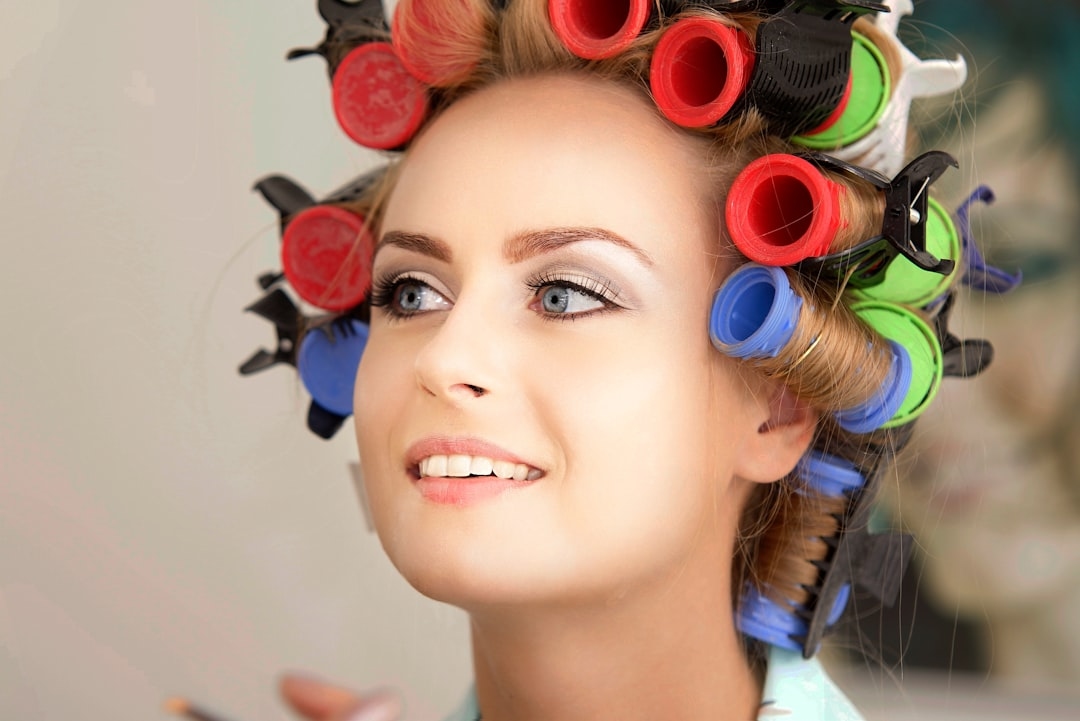
The best approach often combines two techniques. For example: apply rollers to the crown and pin curls to the underneath sections. Or braid-out your lower hair while using rollers on the top layers for mixed texture and movement.
Layering works because different hair sections have different thickness and weight. Hair at your crown is finer and sets faster; hair underneath is thicker and benefits from the mechanical tension of rollers. By matching method to section, you get uniform curl quality across your entire head.
Maintaining Your Heat-Free Curls
Once set, extend curl life with proper nighttime care. Sleep on a silk or satin pillowcase—cotton absorbs moisture from your curls and creates frizz. A silk pillowcase costs £10–£25 and reduces friction significantly.
For longer-lasting waves throughout the week, don’t wash your hair. Dry shampoo (used sparingly) refreshes roots without stripping natural oils that keep curls shaped. If you must wash between curl-sets, use cool water and a sulfate-free shampoo, then quickly re-set curls in rollers while damp.
Humidity breaks down curls because water disrupts hydrogen bonds. On humid days, use an anti-frizz serum (applied sparingly to ends only—too much will weigh curls down) or a light hairspray to lock shape.
How Long Do Heat-Free Curls Last?
Curl longevity depends on your hair type and method:
- Pin curls: 3-4 days with natural hold; 4-5 days with setting lotion
- Rollers: 4-5 days on fine to medium hair; 3-4 days on thick, coarse hair
- Braids/twists: 5-7 days, especially on curly hair types (2c and above)
- Finger waves: 2-3 days without product; 3-4 days with setting lotion
Fine hair typically won’t hold curls beyond 4 days. Thick, coily hair can maintain curls for a week. Your hair’s porosity (how well it absorbs moisture) also matters—high-porosity hair drinks in setting products faster, improving longevity; low-porosity hair resists product, so curls loosen sooner.
Best Practices for Different Hair Types
Fine or Thin Hair
Use smaller rollers (1-1.5 inches) and lightweight setting lotions rather than heavy creams. Pin curls work exceptionally well because they don’t add weight. Keep your hair slightly damper (65-70% dry) when setting, as fine hair dries quickly. Sleep on a soft pillowcase to avoid flattening curls under your weight.
Medium Hair
This hair type is forgiving. Standard 2-inch rollers, pin curls, or braids all work well. You have the most flexibility with product choices—mousse, lotion, or light gel all provide good hold.
Thick or Coarse Hair
Use larger rollers (2.5-3 inches) or multiple braids to ensure curls penetrate deeply. Thick hair takes longer to dry, so plan for 12-16 hours in rollers. Apply setting products generously—thick hair needs extra hold to prevent curls from loosening. Consider two-strand twists or box braids; they lock structure better than single braids.
Curly or Coily Hair (Types 2c–4c)
Braid-outs and twist-outs amplify your natural curl pattern beautifully. You don’t necessarily need setting lotions; your hair’s natural curl memory often does the work. Focus on moisture-rich leave-in conditioners instead of drying lotions. Sleep braids can refresh your curl pattern for 2-3 additional days without resetting.
FAQ: Common Questions About Heat-Free Hair Curling
Can I wash my hair after setting curls without losing them?
Not immediately. Wait at least 48 hours before your first wash—hydrogen bonds need time to fully set. After 48 hours, you can wash, but use cool water and gentle handling. Curls will relax slightly but remain visible for several more days.
Does how to curl hair without heat work on very short hair?
Yes, but with limitations. Hair shorter than 2 inches won’t hold most curls overnight. Pin curls on very short hair (1-2 inches) can work, but you’ll need 20+ pins and 12+ hours. Finger waves are a better option for short hair—they create texture without requiring length.
Will heat-free curls work if my hair is resistant and won’t hold shape?
Likely causes are low porosity (hair doesn’t absorb products well) or extremely straight hair with weak natural curl memory. Solutions: pre-treat with a clarifying shampoo to remove product buildup, use stronger holding products like wave-setting lotion, or try the braid method with tighter sections for stronger shaping.
How often can I safely use these methods?
Daily, if you wish. Heat-free methods cause zero damage—braiding, rolling, and pinning don’t compromise hair structure. You can reset curls every single night without concern. The only caveat: avoid over-manipulating hair when removing curls, as gentle handling prevents breakage.
Are there any products I must avoid before heat-free curling?
Avoid heavy silicone serums immediately before setting—they create a slippery barrier that prevents curls from gripping. Silicones are fine after curls are set (48+ hours later). Also skip intensive oil treatments right before rolling; a light leave-in conditioner is better than heavy oils.
Why Heat-Free Methods Deserve More Credit
Heat-free curling isn’t a compromise; it’s a smarter approach. You get curls that last longer, hair that stays healthy, and no equipment costs. Once you master one method—pin curls, rollers, or braids—you’ll use it repeatedly because it works.
Start with whichever method fits your lifestyle. Working full-time? Try rollers overnight. Have naturally wavy hair? Braid-outs are your fastest route. Prefer simplicity? Pin curls need just bobby pins and time. Pick one, commit to 3-4 tries to get the technique right, then stick with it. Most people find their preferred method locks in after the second or third attempt, delivering consistent results you can count on.
Your hair will thank you—and so will your bank account.